


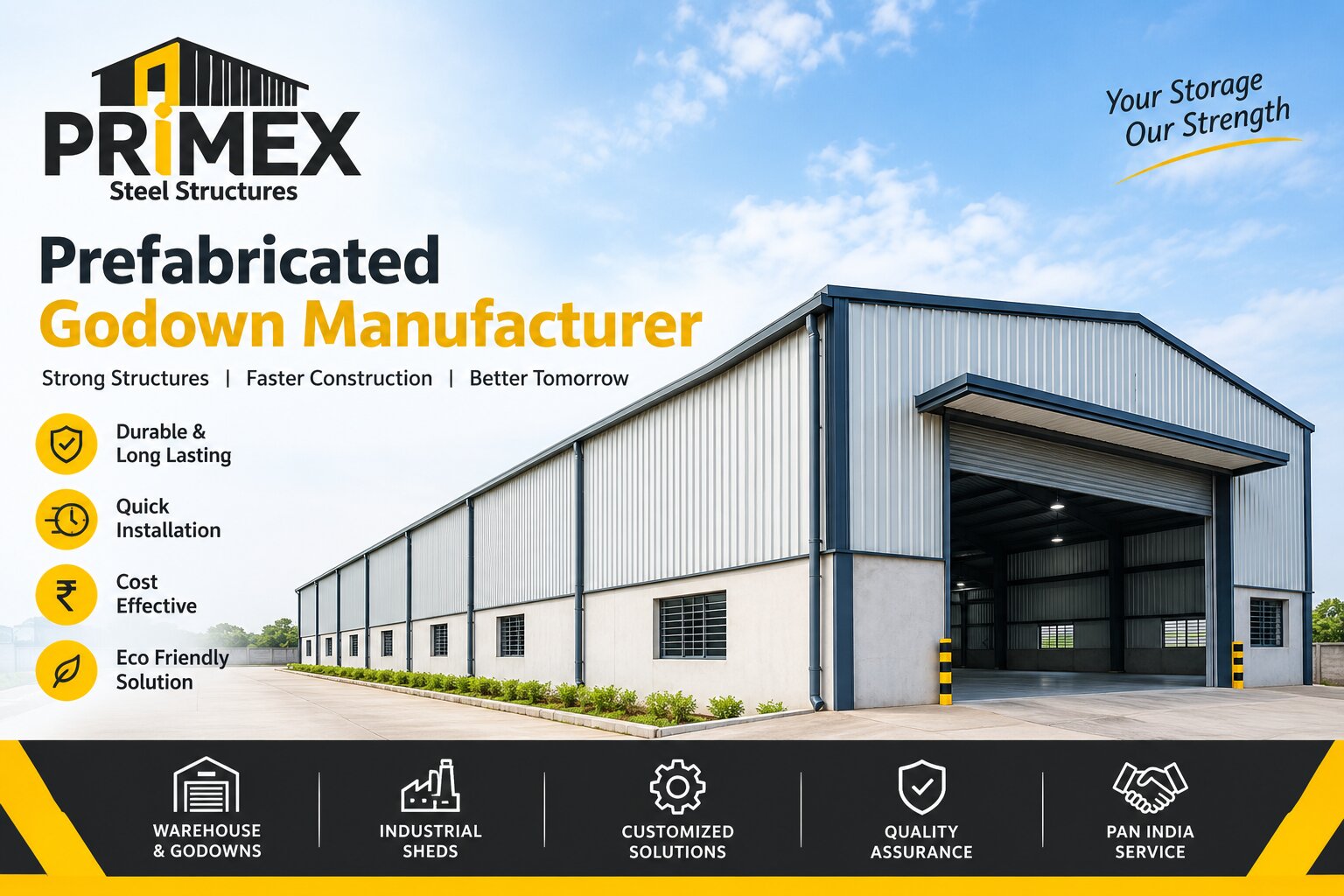
A prefabricated godown is created to serve as an enclosed storage facility for raw materials, finished goods, machinery, agricultural products, and other stock. The performance of a prefabricated godown relies on the type of structural system, materials used for the enclosure, roofs, floors, type of ventilation and insulation, as well as the quality of assembly operations. Thus, a choice of prefabricated godown manufacturer affects the durability, storage capacity, resistance to weather conditions, and practicability of this facility. When choosing a manufacturer, a number of details must be considered.
Assess the Manufacturer’s Structural Capabilities
The structural design affects the load-bearing properties of a prefabricated warehouse. It is necessary to compare the manufacturing capabilities with the requirements of a structure.
Examine the Structural Framework
The frame must meet the dimensions of the warehousing facility. The quality of the welds, bolts, braces, and protective coatings can contribute to the overall strength and reliability of the structure.
Consider the Clear Span
The type of goods that are stored requires different design forms. For instance, a warehouse that is used for storing pallets has to have a reasonable height and capacity. Whereas another warehouse designated for agricultural products should have adequate ventilation and protection against humidity.
Quality of Materials
Material quality plays an important role in determining the strength, durability, maintenance, and exposure to the environment.
Steel Specification Assessment
Steel used in beams, columns, purlins, braces, and other structural elements should be made from appropriate materials and sizes capable of handling loads. The strength of the steel should correspond to the structural calculations and the final application of the steel.
Roof and Walls Material Check
The roof and walls of the godown provide protection from sunlight, rain, dust, and other climatic conditions. Their width, shape, coatings, insulation, joints, and fixing methods play a major role in the performance of the godown.
Consider the Storage Requirements
The interior needs of a warehouse differ according to the sort, number, size, and mass of the products being stored.
Account for Storage Loads
The building should be able to support the anticipated weight of everything in storage, as well as racks, machines, and systems used in managing the stored goods. Any arrangement involving heavy stacks of goods or racks may require careful examination of the structural and floor load.
Plan for Material Movement
An efficient warehouse must be sufficiently spacious for loading and unloading processes, as well as for working with forklifts and loading pallets. Door positions, aisle widths, clearance heights, and column arrangement should all conform with the storage and handling system.
Review Safety and Fire Protection Requirements
Warehouses can have flammable materials inside them, besides other products that may also have their own requirements. The planning of the building must factor in the fire safety requirements that pertain to various materials and types of buildings. The layout should be considered depending on the specific needs of the project, as it should include exits, approaches, ventilation systems, fire alarms, extinguishing systems, and so on.
Maintain Safe Access
When it concerns transportation, it should be clear where the people and materials can go. Doors, emergency exits, and fire prevention measures should enable people to work safely.
Conclusion
Primex Building System Pvt Ltd is an experienced prefabricated godown manufacturer thatcombines sound structural design with suitable materials, accurate fabrication, efficient installation, and flexibility in layout and specifications. Storage loads, clear span, roof and wall construction, insulation, ventilation, access, fire safety, and future expansion should be assessed before finalising a supplier. Compare technical specifications, project scope, warranty terms, and installation support, then request a detailed quotation from a manufacturer that meets the specific storage requirements.