

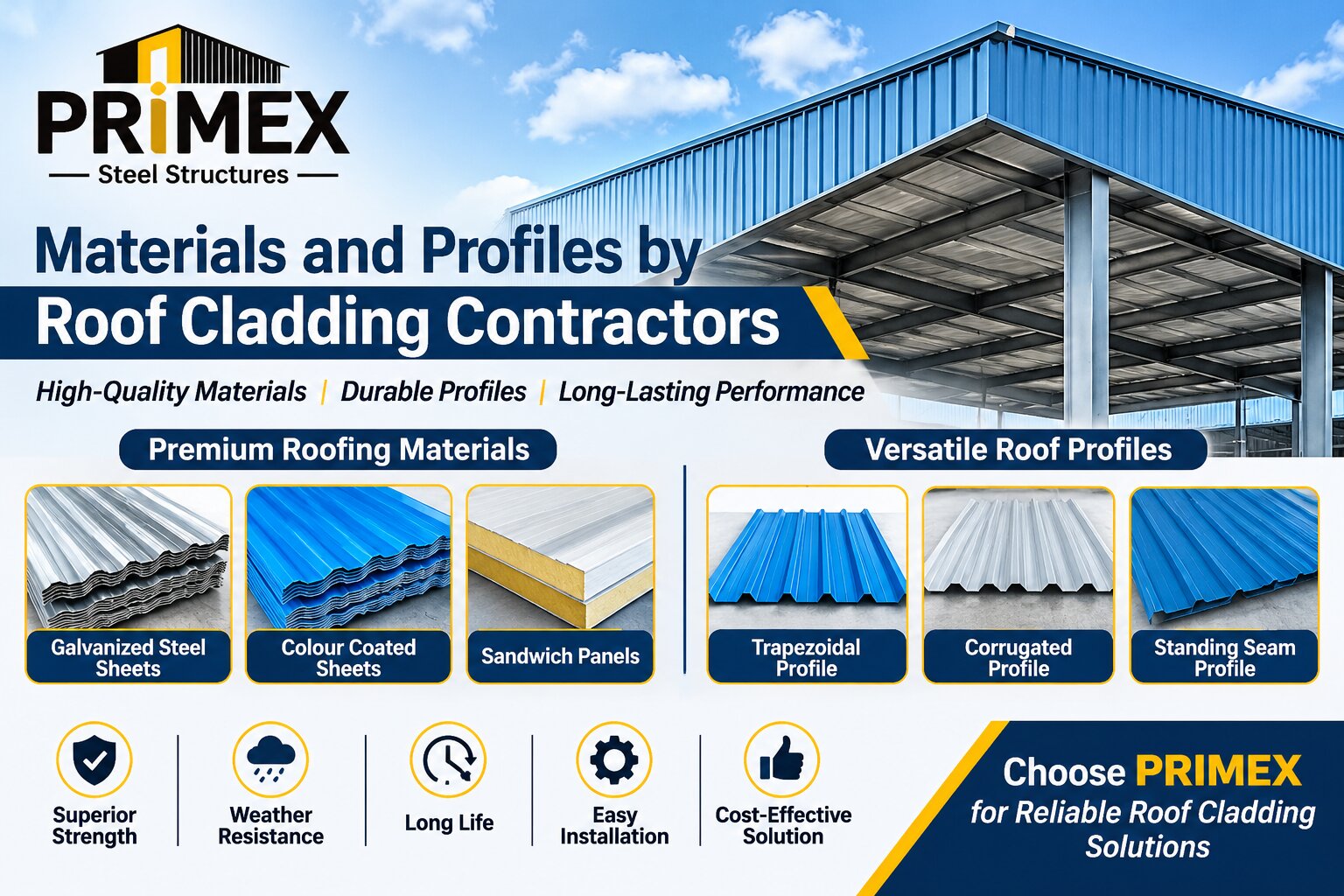
A roof’s efficiency depends on the sheet it’s made of and its profile. The material plays an important role in determining the lifespan of the roof by protecting it from the impacts of rust, sun and rain. The profile determines the roof’s extension, drainage, and the house’s appearance. Qualified roof cladding contractors take into account all aspects when making their recommendations, while knowing all alternatives allows you to ask intelligent questions and evaluate quotations fairly.
Various Roofing Materials
Different metals are employed for roofing and wall cladding, with each metal suitable for certain conditions and budgets.
Galvanized Steel
Corrugated galvanized iron has been the #1 choice for industrial huts, storage facilities and aircraft hangars for years. It is made by applying hot-dip zinc onto the surface of mild steel. The weight of the zinc layer is specified as per IS 277. The structure of the sheet has wavy and corrugated profile which increases its resistance to damage from bending, which makes it the material of choice in cases of low budgets.
Aluminium-Zinc Coated Steel
Today, many professionals prefer working with aluminium-zinc coated steel (also known as Galvalume, Zincalume or Aluzinc). This metal consists of aluminium, zinc and silicon, which gives it higher resistance to the atmosphere compared to conventional galvanization. Moreover, this product is lighter and retains the strength of its predecessors. High-quality sheets will have an anti-fingerprint coating applied to the surface that helps keep it clean during use.
Aluminium and Copper
Aluminium is a good choice for humid environments since the oxide layer formed on its surface is a good natural protector. Copper is easy to work with, requires minimum maintenance and can be recycled.
Pre-Painted Steel Finishing
The addition of colours to pre-painted steel is a form of protection. Modern techniques for producing pre-painted sheets involve the use of highly advanced technology and methods. The first stage involves preparation of the steel surface, followed by painting of the sheet and going through a curing process.
The type of paint chosen is as important as the colour:
Polyester: It is affordable and works well for typical applications.
Silicone Modified Polyester (SMP): Improved resistance to the weather and colour fading.
Fluorocarbon: The best alternative for harsh conditions in case you need to cover houses hit by strong storms.
Some of the Most Common Roof Shapes
Corrugated Roof Shape
This simple roof shape is strong, inexpensive, and easy to install. Today, it is still the roof of choice for industrial buildings, warehouses, and sheds, as it efficiently directs rainwater.
Crimp Curve Roof Shape
Crimp curve sheets are available in concave and convex shapes. They are used in places where aesthetics are important, such as canopies and entrances, because the curve adds beauty that doesn’t need additional framework.
Klippon Roof Shape
Klippon is a stiffened trapezoidal roof shape with considerable spanning capacity. It provides an outstanding appearance to buildings because of its flat and original design. It is a good option for very long roofs at a low pitch, as fewer seams reduce the risk of leakage.
Flat-Seam and Standing-Seam Roof Shape
Flat-seam and standing-seam roofs are also quite common and used in cases where a neat, invisible-fixing appearance is required.
Conclusion
When you select the most optimal material for your roof and profile in advance, you can prevent problems related to leaks, rust and expensive roofing repair work in future. Primex Building Systems manufactures roofing and cladding from metals like aluminium, zinc-coated steel, pre-painted steel and galvanized steel, and in various forms such as corrugated, crimp curve or Klippon profiles. Provide your building specifications to our experts and ask for a roof that fits your project needs.